windowstaskbar.com

Simplify Your Desktop Experience

Windows Taskbar

A Smarter Way to Navigate, Organize, and Personalize Windows

Explore the Windows Taskbar, your central desktop interface for seamless navigation, effortless multitasking, and quick access to essential applications. Discover how taskbar customization, system controls, and productivity tools create a more organized and efficient Windows experience.

Illustration of a Windows 11 desktop with the Start menu open above a centered taskbar showing pinned apps, running-app indicators and the system tray
8.taskbar components explained
2.Windows versions compared
6.common problems solved
8.in-depth taskbar guides

02Overview

Everything You Need, Right at Your Fingertips

The Windows Taskbar is the horizontal bar that runs along the bottom of the screen by default. It is the one part of the desktop that stays visible while you work, which is exactly why it carries so much responsibility.

From a single strip you launch apps, see which programs are running, switch between windows, search your PC, check the network and battery, change the volume and read notifications. Because it never moves out of reach, a well-arranged taskbar saves dozens of small trips to menus and folders every day.

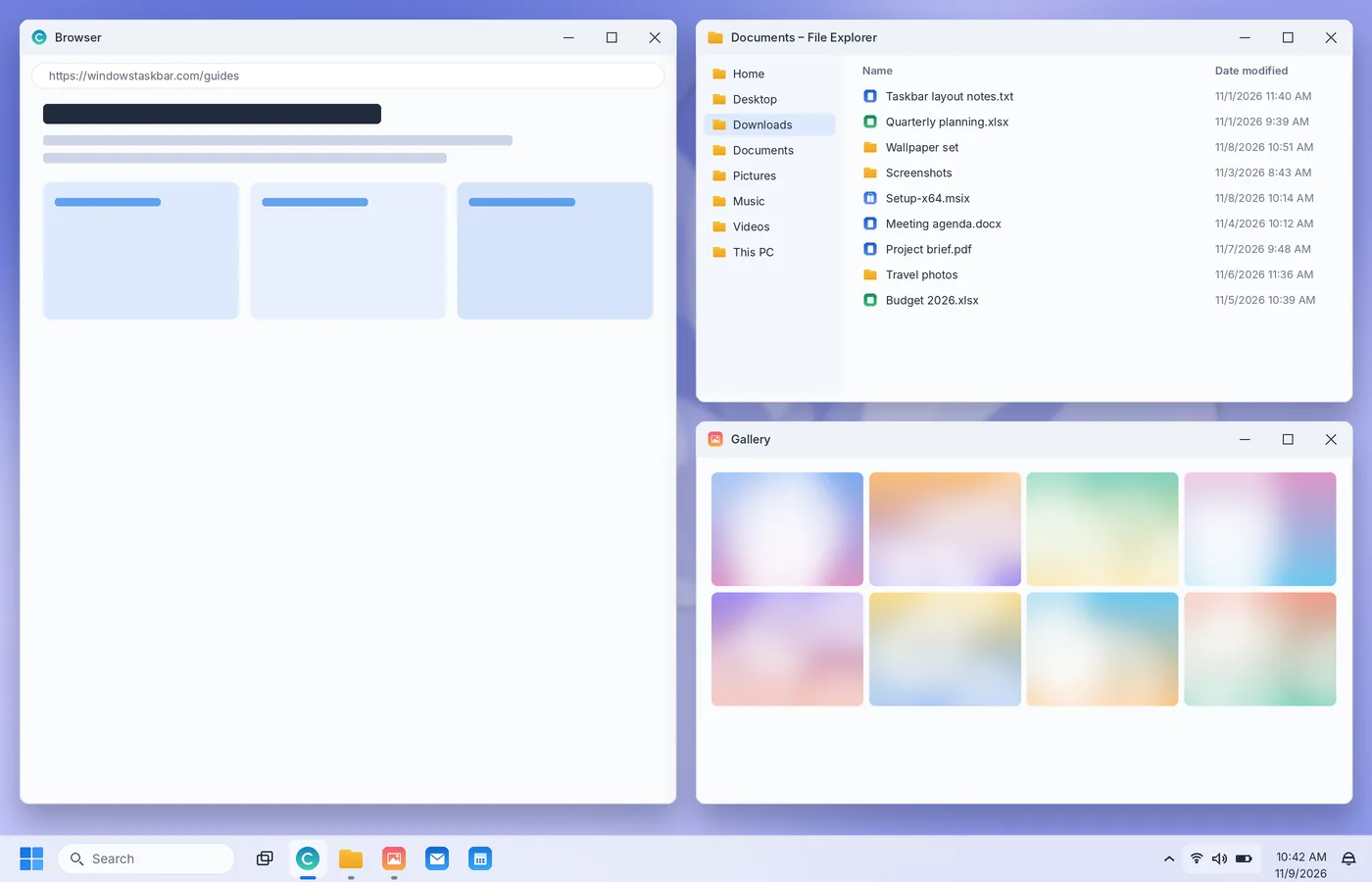
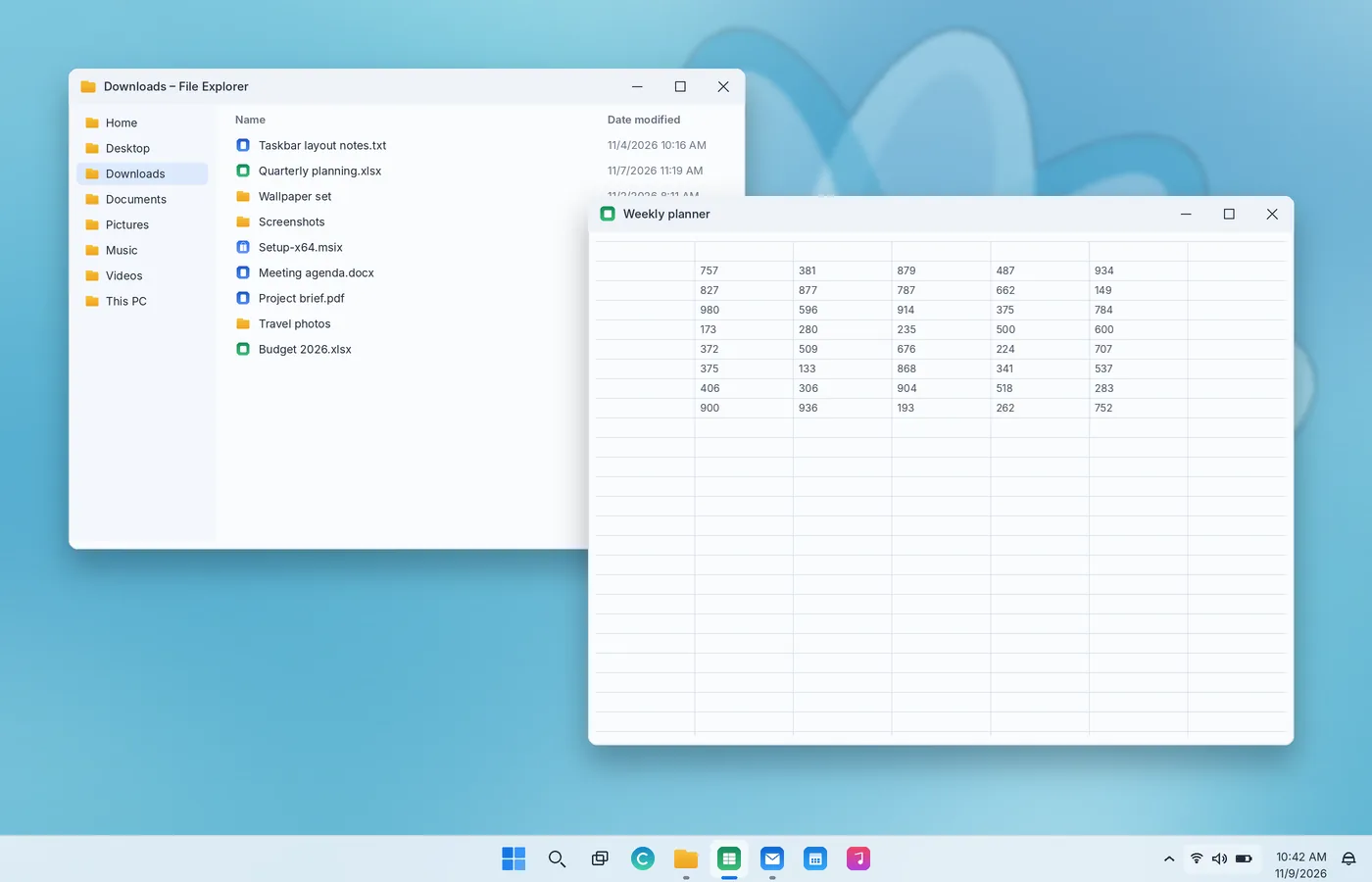
Illustration of a Windows desktop with File Explorer and a spreadsheet open while the taskbar marks the running apps beneath them
open windows are mirrored as buttons on the taskbar
Zone 01Launch areaStart, Search and Task View open the rest of Windows.
Zone 02App areaPinned shortcuts and running apps share the middle of the bar.
Zone 03System areaThe system tray, clock and notifications sit in the corner.
Taskbar components

Explore Every Part of Your Taskbar

Eight building blocks make up the Windows Taskbar. Choose a component on the taskbar below to see what it does, where it lives and the keyboard shortcut that opens it.

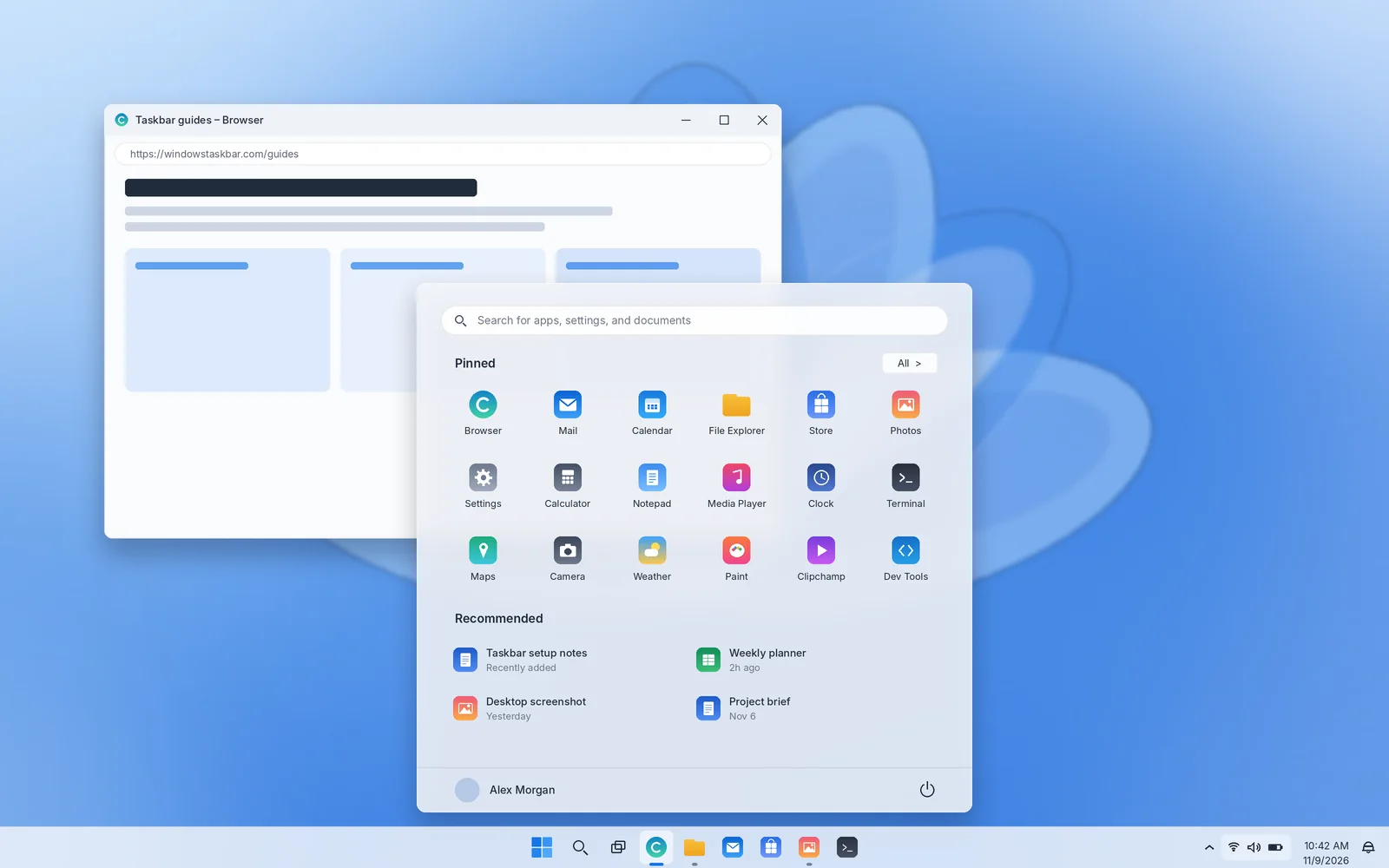
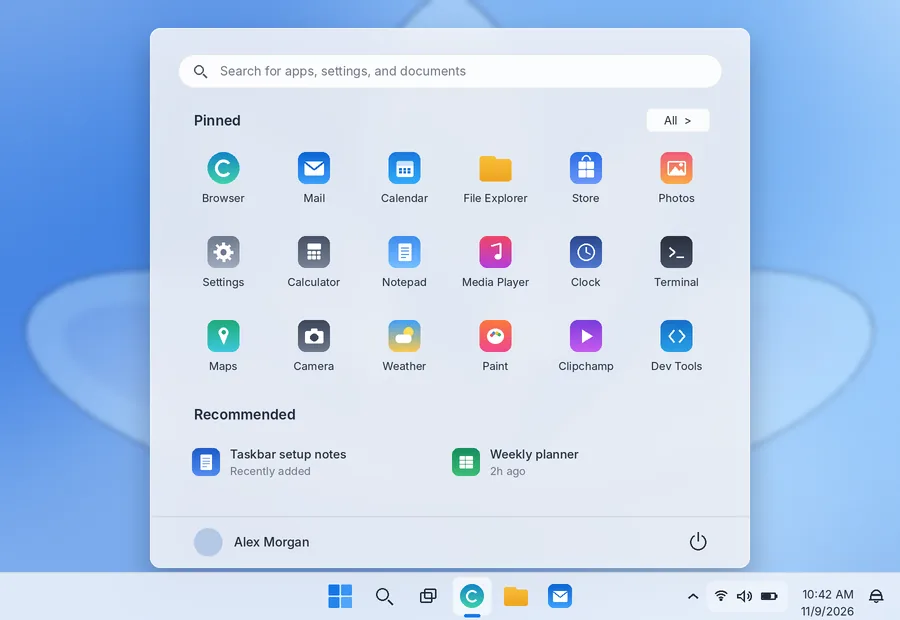
Illustration of the Windows 11 Start menu showing a search box, a grid of pinned apps and a Recommended section
Component 01 / 08

Start Menu

The Start button is the front door to everything installed on your PC. In Windows 11 it opens a centered menu with a search box, a grid of pinned apps, an All apps list and a Recommended area for recent files. Windows 10 opens an alphabetical app list beside a resizable area of tiles. In both versions your account picture and the power button for sleep, restart and shut down are at the bottom.
Open itSelect Start or press Windows
Power user menuRight-click Start or press Windows + X
Customization

Make Your Taskbar Feel Like Your Own

Both versions keep their taskbar options in Settings › Personalization › Taskbar, which you can reach quickly by right-clicking an empty part of the taskbar. The options are not identical, so filter the cards by the version you use.

01

Taskbar alignment

Choose where your icons sit along the bar and, where supported, which edge of the screen the bar uses.

Windows 11Taskbar behaviors › Taskbar alignment: Center or Left.
Windows 10Icons are left-aligned. "Taskbar location on screen" moves the whole bar to any edge.
02

Application pinning

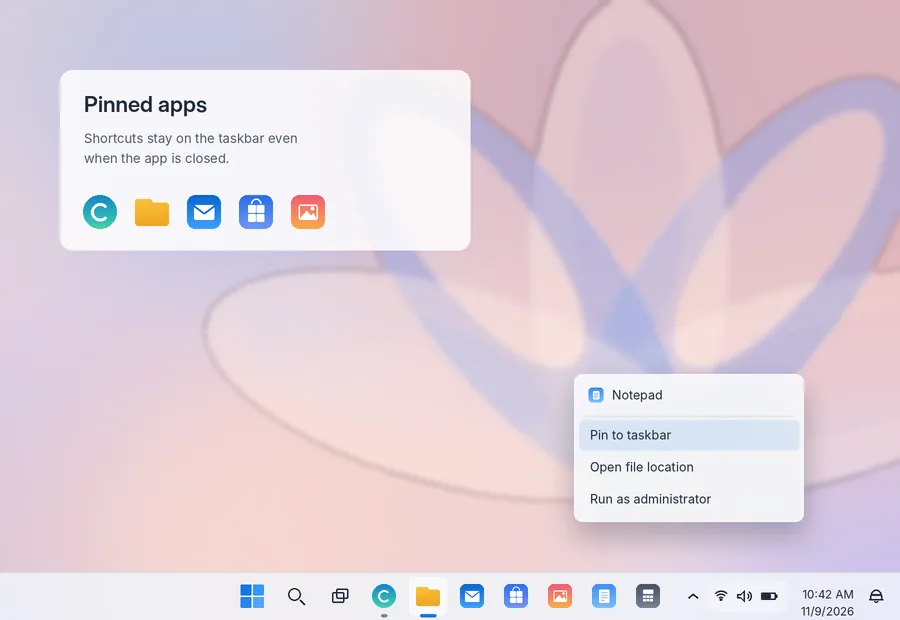
Keep favourite apps on the bar permanently and arrange them in the order your hands expect.

Windows 11Right-click an app in Start or on the taskbar › Pin to taskbar.
Windows 10Right-click an app › Pin to taskbar, or More › Pin to taskbar from Start.
03

Auto-hide settings

Give your apps the full height of the screen; the taskbar slides back when you point at the edge.

Windows 11Taskbar behaviors › Automatically hide the taskbar.
Windows 10Automatically hide the taskbar in desktop mode, with a separate tablet mode switch.
04

System tray icon management

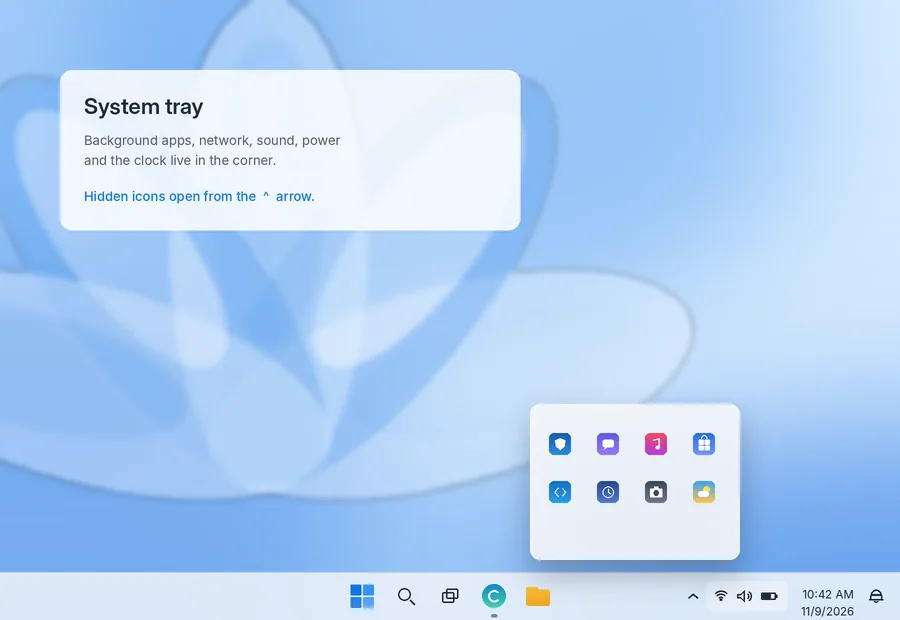
Decide which background apps earn a permanent spot beside the clock and which stay in the overflow.

Windows 11Other system tray icons: switch each app on or off. You can also drag icons in and out of the flyout.
Windows 10Select which icons appear on the taskbar, plus Turn system icons on or off.
05

Personalization options

Show or hide built-in buttons and colour the bar to match your accent colour.

Windows 11Taskbar items for Search, Task view and Widgets. Accent colour on the taskbar requires dark Windows mode.
Windows 10Use small taskbar buttons, Peek, badges and toolbars. Colours › Start, taskbar, and action center.
06

Multi-display settings

Control whether every monitor gets a taskbar and which taskbar shows the buttons for each window.

Windows 11Show my taskbar on all displays, and choose where taskbar apps appear.
Windows 10Show taskbar on all displays, Show taskbar buttons on, and Combine buttons on other taskbars.
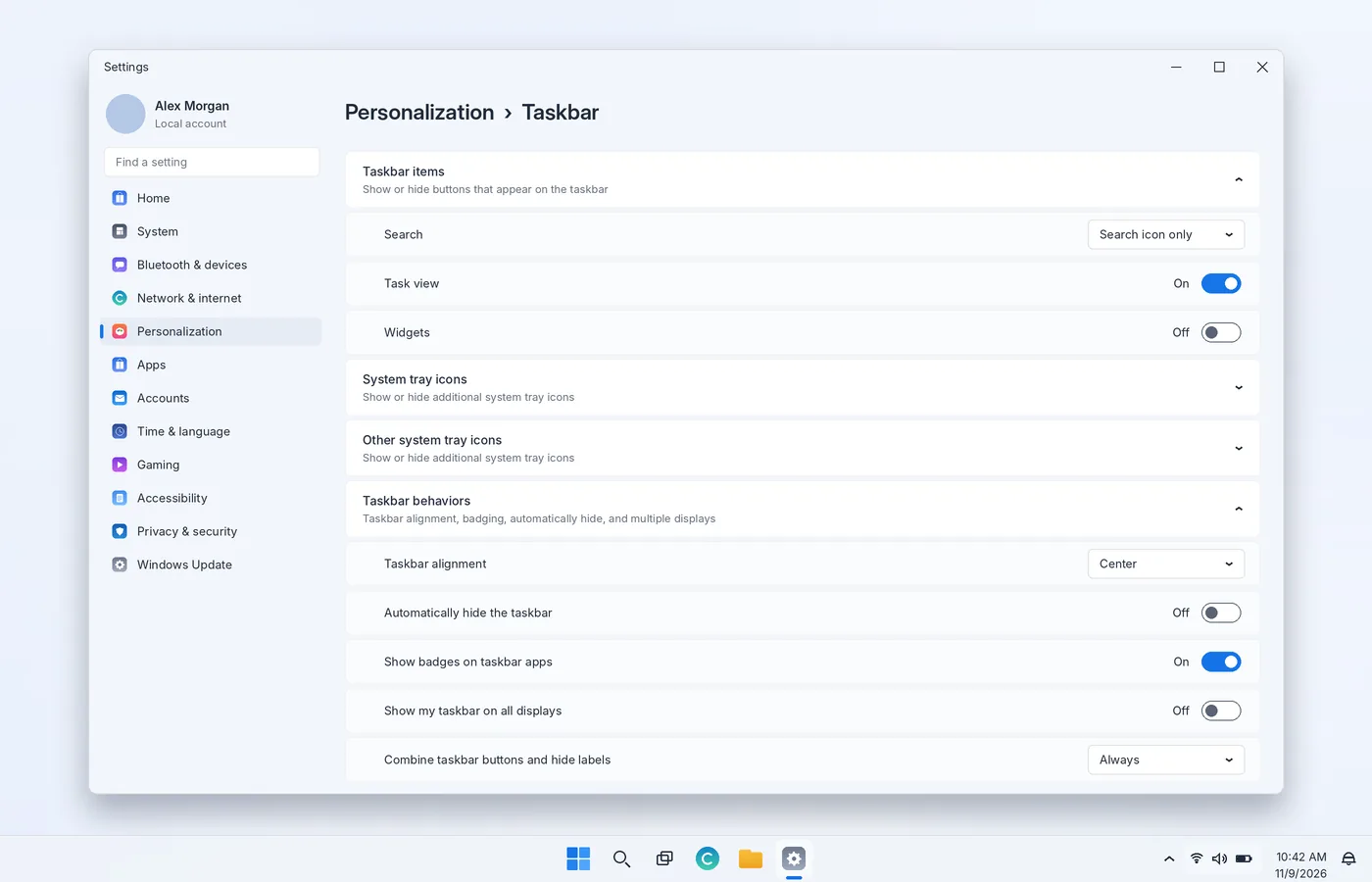
Illustration of the Windows 11 Settings app open on Personalization, Taskbar with taskbar items and taskbar behaviors listed
Illustrative render of Settings › Personalization › Taskbar in Windows 11
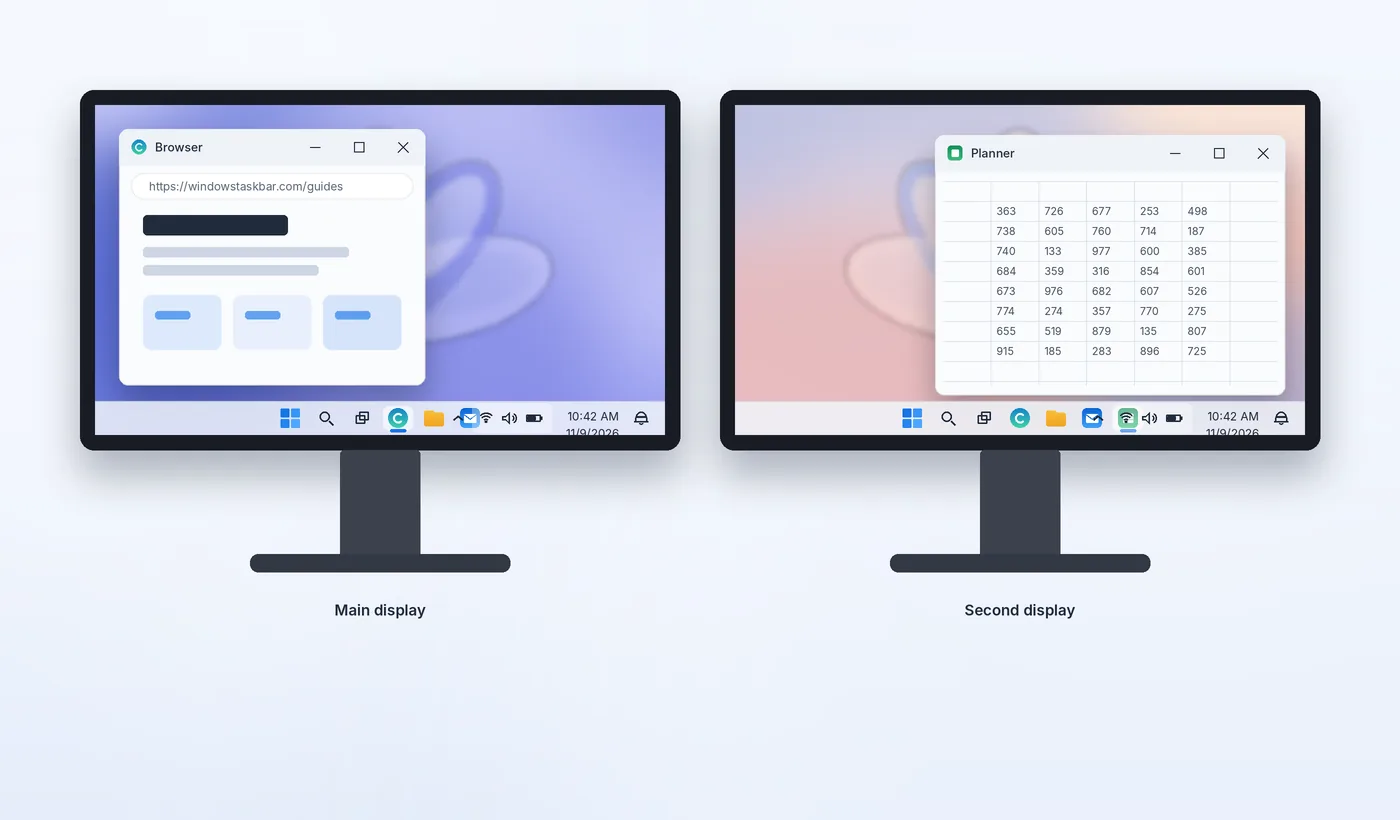
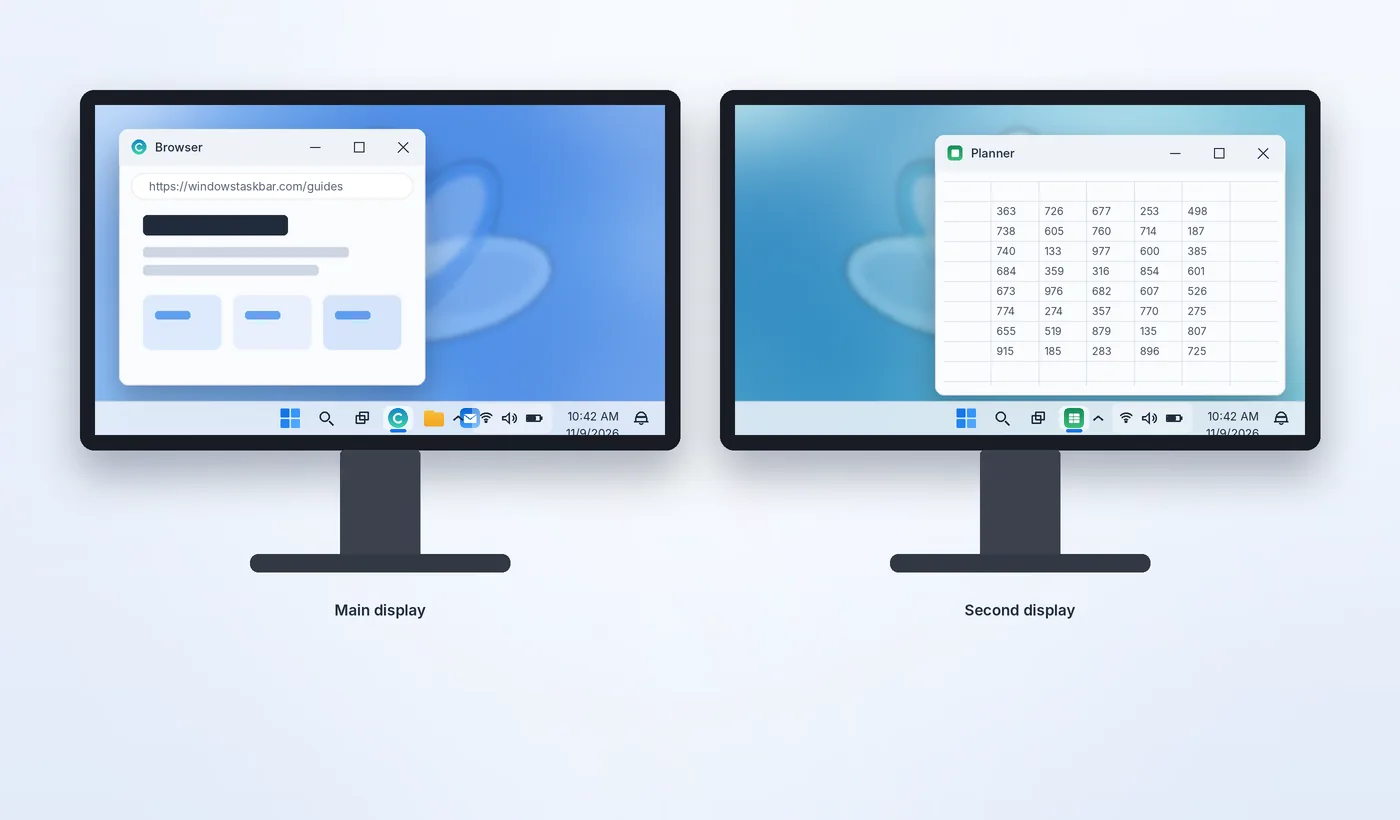
Illustration of two monitors where the second display's taskbar shows all pinned apps
a taskbar on every connected display
Windows 10 and Windows 11 taskbar customization compared
CapabilityWindows 10Windows 11
Move the taskbar to another edgeYes: Top, Left, Right or Bottom, or drag it when unlockedBottom only on earlier releases. Recent updates are rolling out a Taskbar position setting (Top, Bottom, Left or Right).
Center the iconsNot built inYes, centered by default with a Left option
Resize the taskbarDrag the edge when the taskbar is unlocked; small buttons optionFixed height on earlier releases. Recent updates add a smaller taskbar option.
Combine buttons and labelsAlways, When taskbar is full, or NeverAlways, When taskbar is full, or Never (Windows 11 version 23H2 and later)
Toolbars (Links, Desktop, Address)Yes, from the taskbar context menuNot available
Built-in buttonsSearch, Task View, Cortana, News and interests (varies by build)Search, Task view and Widgets (varies by build)

05Two versions06

The same idea, built twice. Here is how the taskbar looks and behaves in each version of Windows still in wide use.

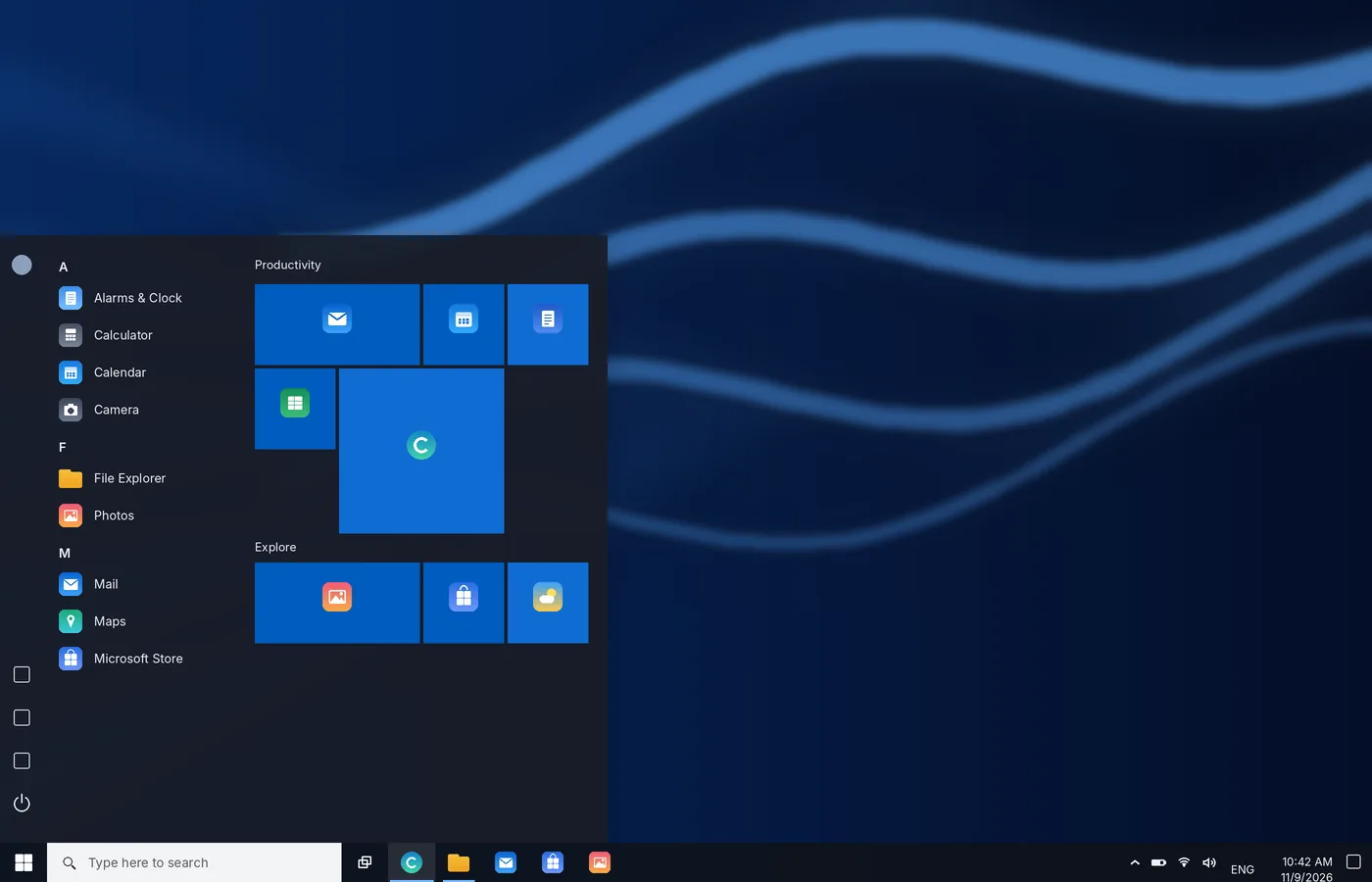
Illustration of a Windows 10 desktop with the Start menu app list and tiles open above a dark taskbar with a search box

Illustrative render of the Windows 10 Start menu and taskbar

Windows 10Left-aligned · movable · resizable

A Familiar and Flexible Desktop Experience

The taskbar in Windows 10 is the most adjustable taskbar Microsoft has shipped. Unlock it and you can drag it to any edge of the screen, make it taller to fit two rows of buttons, or add toolbars beside the clock.

  • Start menu with tiles. An app list on the left and resizable tiles on the right, grouped and named however you like.
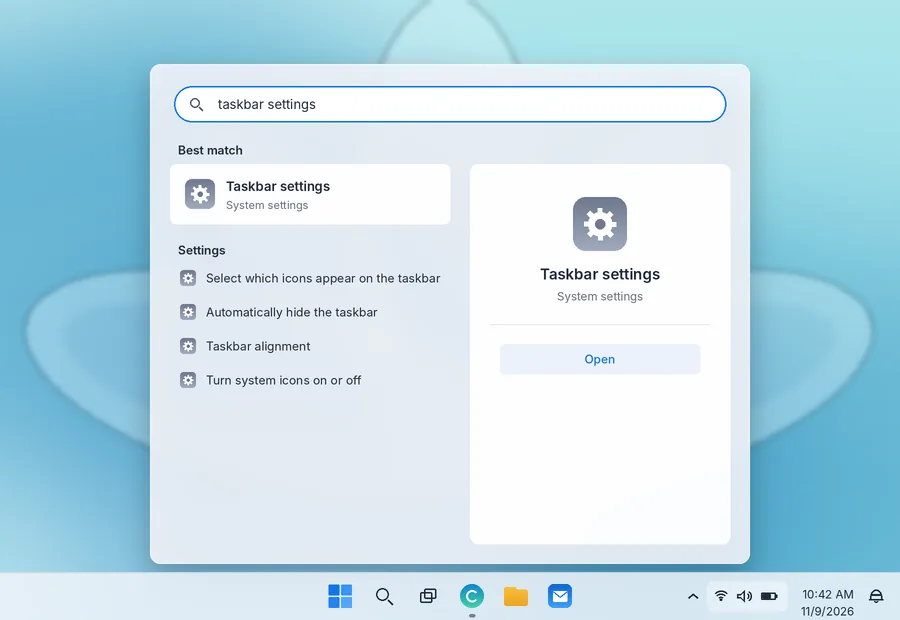
  • Search box. "Type here to search" sits next to Start by default; right-click the taskbar › Search to show an icon or hide it.
  • Pinned apps and Jump Lists. Right-click any button for recent files, pinned items and app-specific tasks.
  • Notification area and Action Center. Status icons, the clock and a panel that combines notifications with quick actions.
  • Lock the taskbar. Prevents accidental moves; switch it off before you drag or resize the bar.
Support status. Windows 10 reached the end of support on October 14, 2025. It keeps working, but security updates now depend on Extended Security Updates, so plan your move to Windows 11 where your hardware allows it.
Illustration of a Windows 11 desktop with three snapped windows and the taskbar set to left alignment with a search box

Illustrative render: Windows 11 taskbar with left alignment and a search box

Windows 11Centered or left · touch-ready

A More Refined Desktop Navigation Experience

Windows 11 rebuilt the taskbar with a cleaner look and larger touch targets. Icons are centered by default, so Start and your apps sit right under your eyes on wide monitors. One setting returns them to the left edge.

  • Centered or left-aligned icons. Settings › Personalization › Taskbar › Taskbar behaviors › Taskbar alignment.
  • Taskbar items. Choose how Search appears and whether Task view and Widgets get their own buttons.
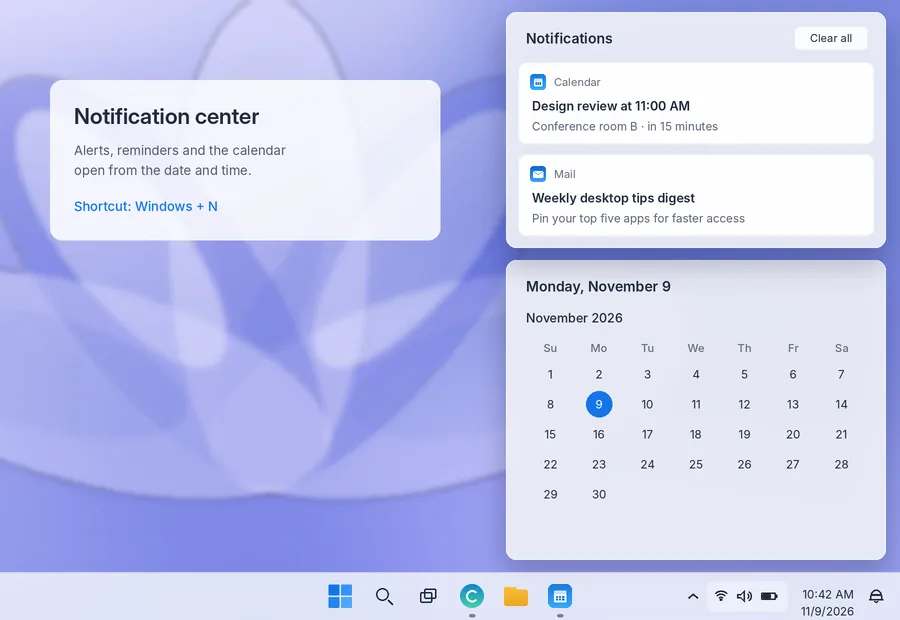
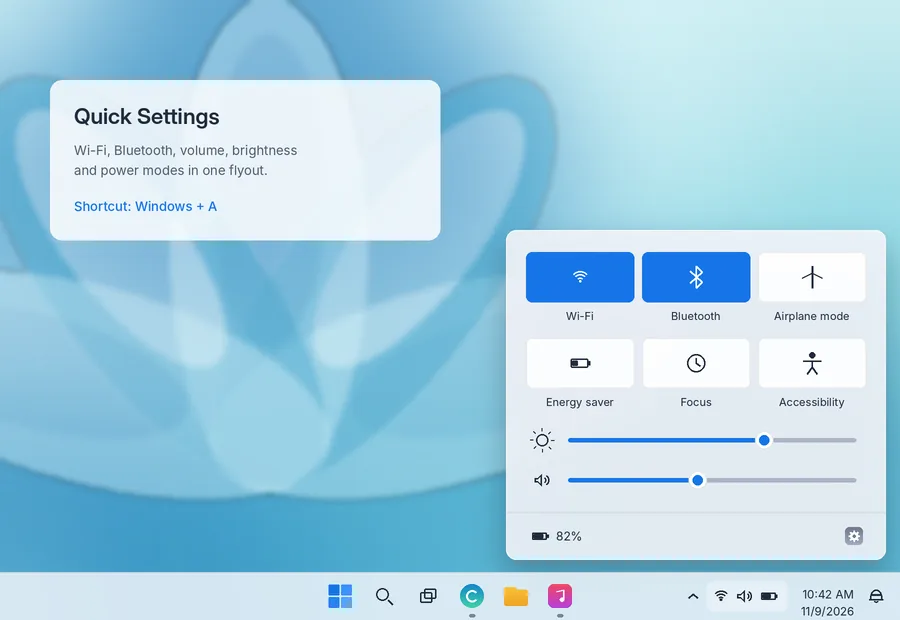
  • System tray. Network, volume and battery icons open Quick Settings, and the clock opens notifications with the calendar.
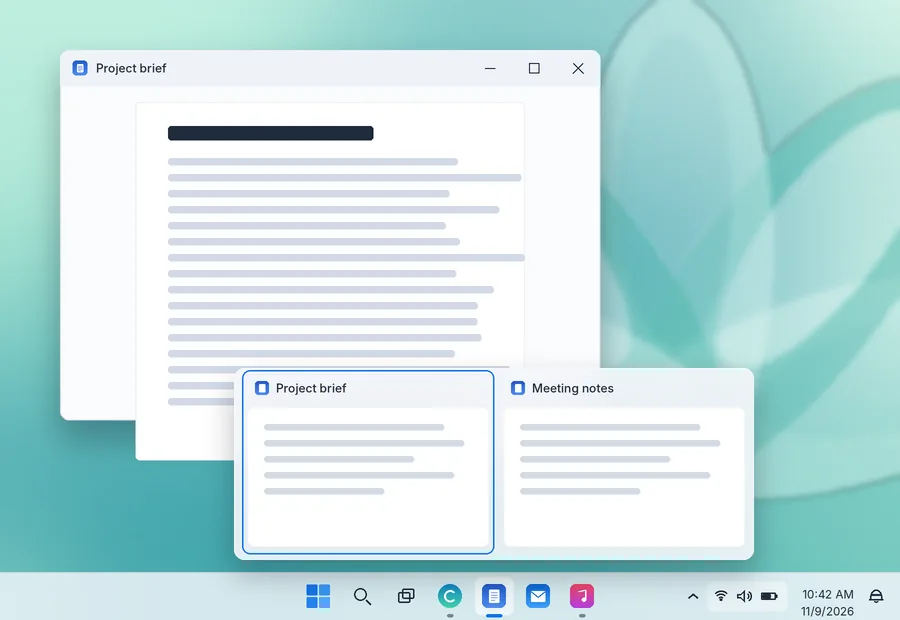
  • Snap and multitasking. Hover over a window's maximize button for Snap layouts, and hover over a taskbar app to preview its windows.
  • Position and size. Recent Windows 11 updates are gradually adding Taskbar position (Top, Bottom, Left, Right) and a smaller taskbar under Taskbar behaviors.
Not seeing a setting? Microsoft releases taskbar features in stages. If an option described here is missing, check Settings › Windows Update. It may simply not have reached your device yet.
Productivity

Work Smarter with Better Desktop Navigation

The taskbar is fastest when you combine its buttons with a handful of shortcuts. These six techniques work in both Windows 10 and Windows 11.

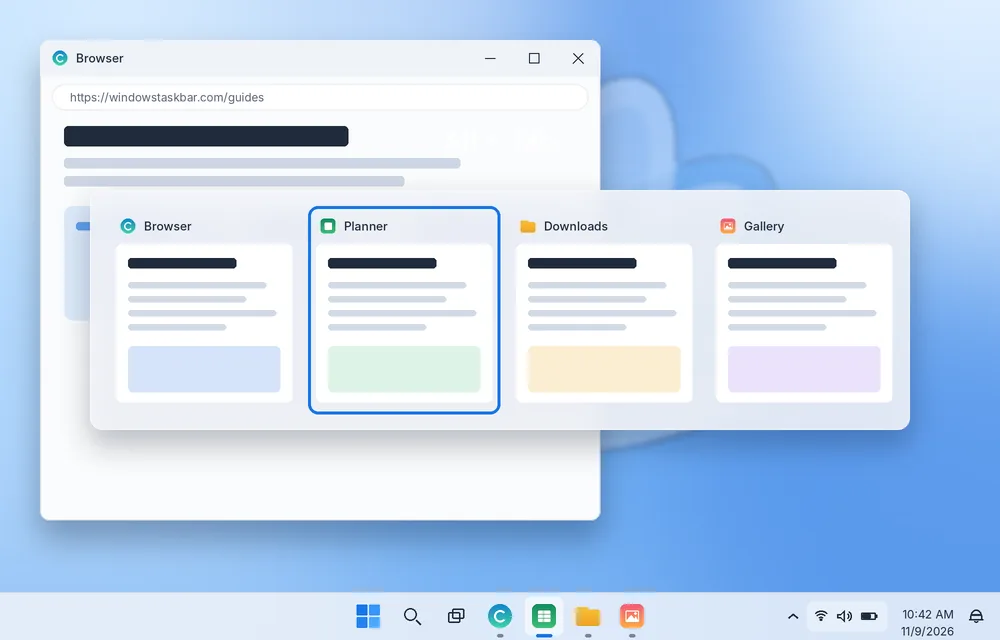
Illustration of the Alt plus Tab switcher showing four open app thumbnails with one selected

Application switching

Click a taskbar button to bring its window forward, or click it again to minimize it. Hold Alt and tap Tab to move through open windows without touching the mouse.

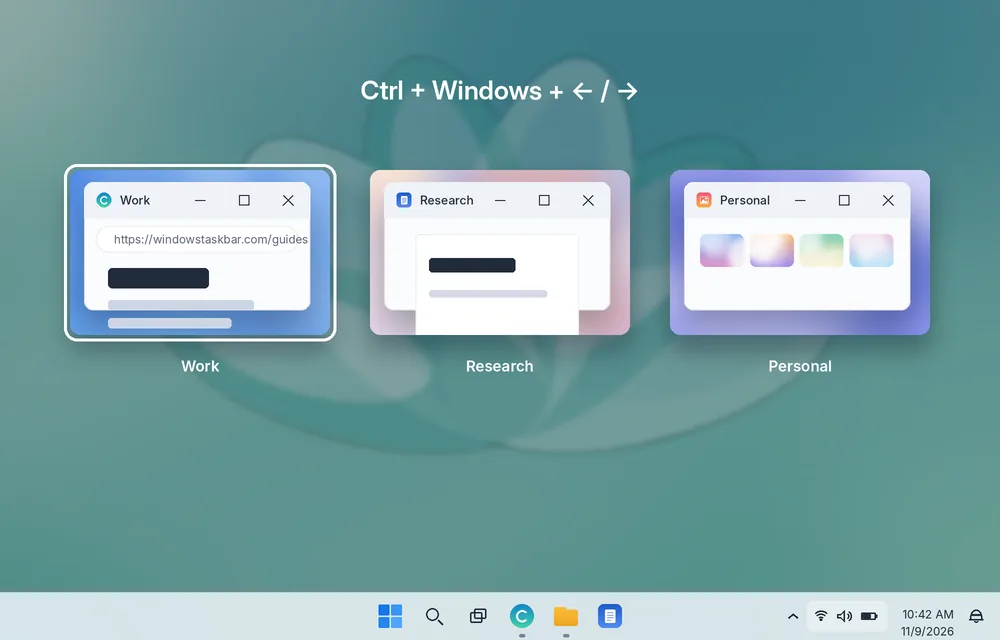
Illustration of three virtual desktops named Work, Research and Personal shown side by side

Virtual desktops

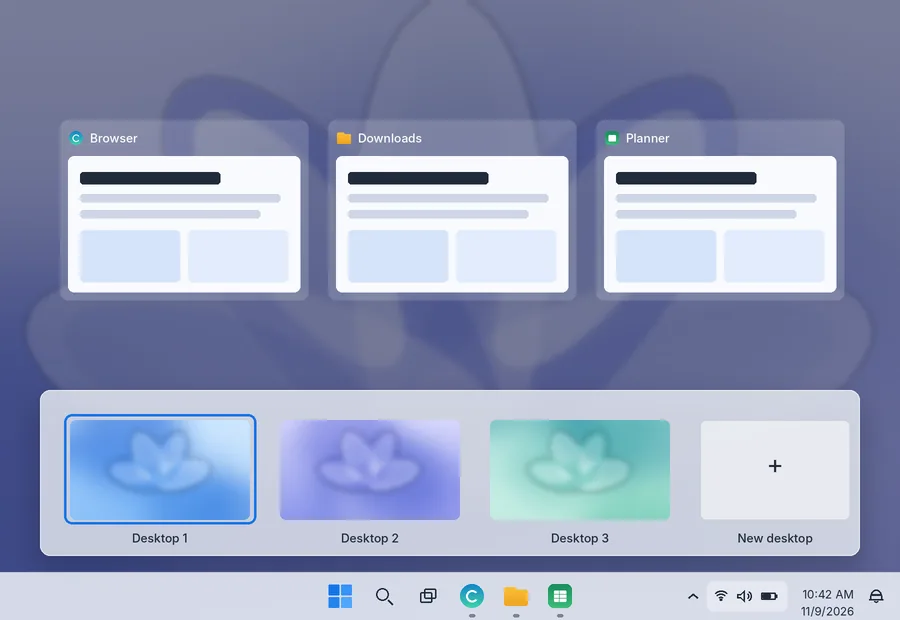
Separate projects into their own desktops. Each one keeps its own set of windows, and the taskbar shows only the apps on the desktop you are using by default.

Task View

Use the Task View button or Windows + Tab to see every window and desktop at once, then drag windows between desktops.

  • Open Task ViewWin + Tab
  • New desktopCtrl + Win + D
  • Switch desktopCtrl + Win + ←/→
  • Close desktopCtrl + Win + F4
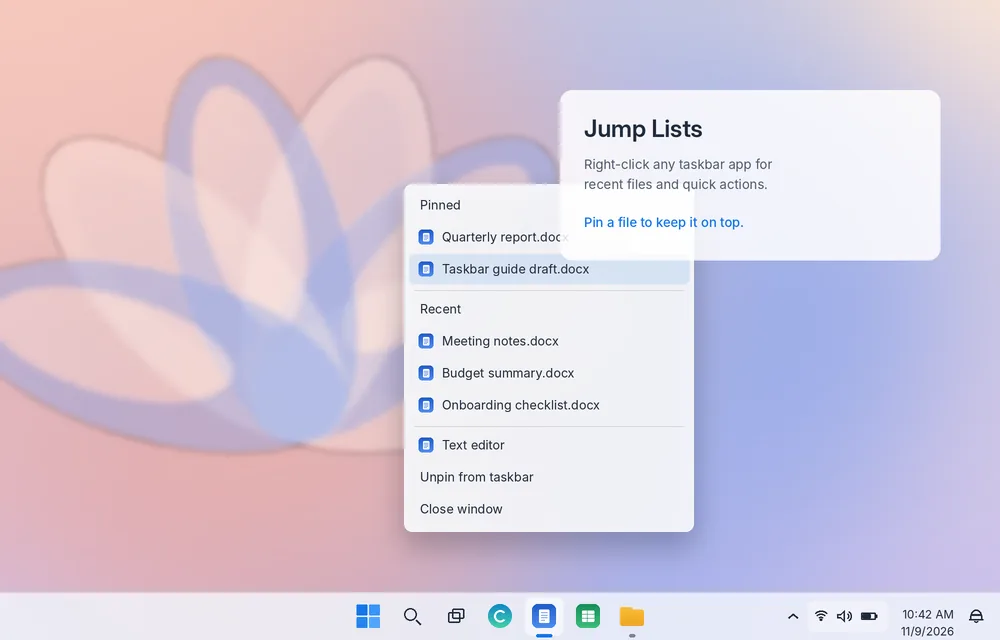
Illustration of a taskbar Jump List with pinned and recent documents and options to unpin or close the window

Jump Lists

Right-click a taskbar app to see its recent files, folders or sites, depending on what the app supports. Hover over an item and select the pin to keep it at the top of the list. It is the quickest way back into the document you closed five minutes ago.

Pinned applications

Pin the five to eight apps you open every day and order them by habit. Keep rarely used apps out of the bar; a short row is faster to scan than a long one.

  • Open pinned appWin + 1–0
  • Open its Jump ListWin + Alt + 1
  • New instanceShift + click
  • Focus the taskbarWin + T
Illustration of a dual-monitor desk setup where each screen has its own taskbar

Multiple-monitor workflows

Show a taskbar on every display and let each one list only the windows open on that screen. Windows + Shift + ←/→ moves the active window to the next monitor.

Settings & troubleshooting

Understand Settings. Solve Common Problems.

Most taskbar problems come from a stuck Windows Explorer process, a setting changed by accident, or a display change. Each fix is labelled with the Windows versions it applies to and starts with the least disruptive step.

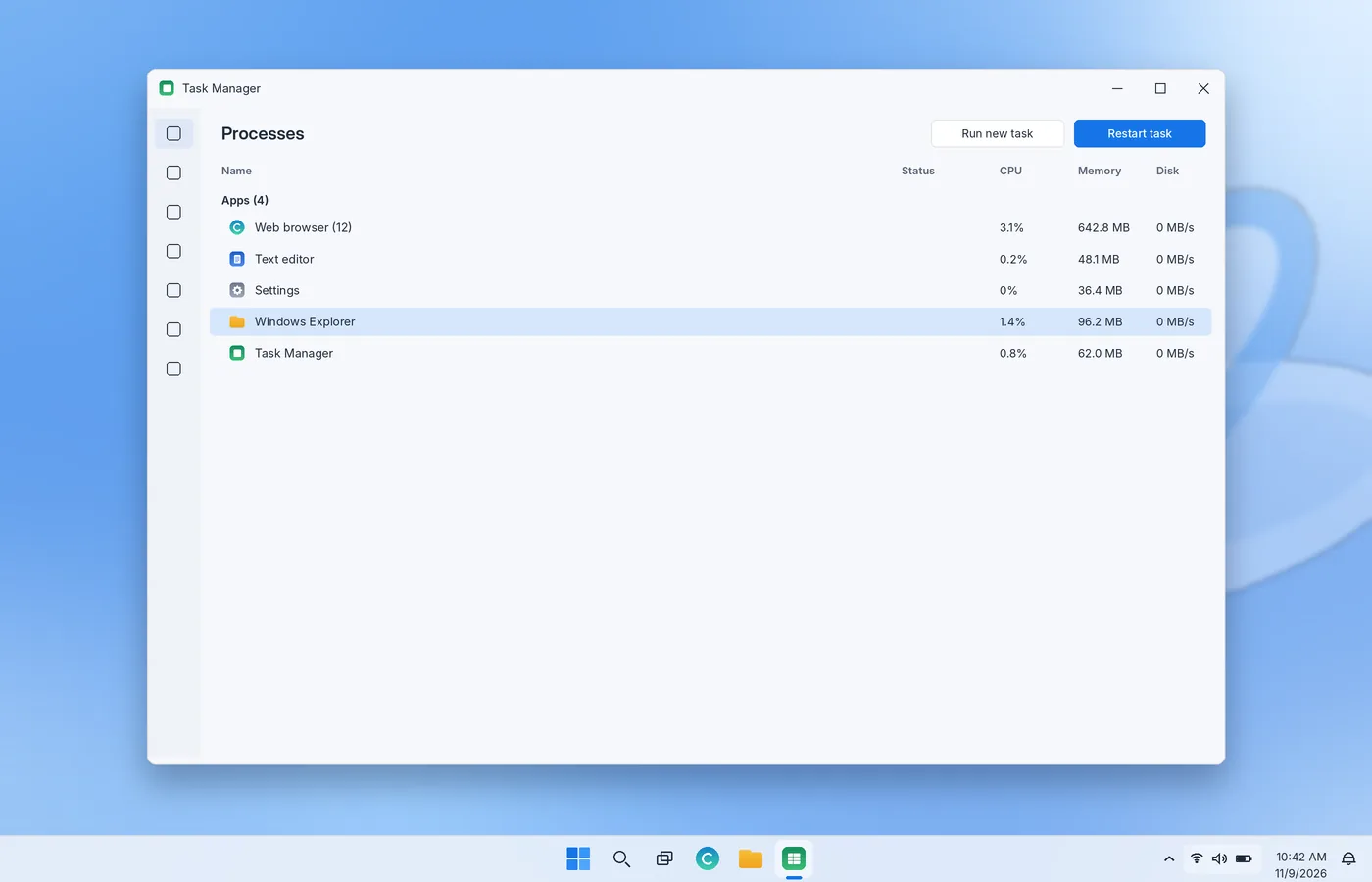
Illustration of Task Manager with Windows Explorer selected in the Processes list and the Restart task button highlighted

Before you start

  1. Save any open work. Restarting Explorer closes File Explorer windows.
  2. Press Ctrl + Shift + Esc to confirm Task Manager opens.
  3. Check Settings › Windows Update for pending updates and restarts.
  4. Note when the problem began. A recent app or driver install is often the cause.

Taskbar not responding

Windows 10 & 11

When clicks do nothing or Start will not open, the Windows Explorer process that draws the taskbar has usually hung.

  1. Press Ctrl + Shift + Esc to open Task Manager.
  2. On the Processes tab, select Windows Explorer, then choose Restart (Windows 11 shows it as Restart task at the top).
  3. If Explorer is missing, choose Run new task, type explorer.exe and press Enter.
  4. Still frozen? Sign out and back in, or restart the PC, then install pending updates.
  5. For recurring freezes, open Terminal (Admin) and run sfc /scannow, followed by DISM /Online /Cleanup-Image /RestoreHealth.

Taskbar disappearing

Windows 10 & 11
  1. Move the pointer to the edge of the screen. If the bar slides out, auto-hide is on; switch it off in taskbar settings.
  2. Press Windows to check whether a full-screen app or game is covering it, and press F11 or Esc to leave full screen.
  3. Restart Windows Explorer from Task Manager as described above.
  4. Windows 10 Turn off Tablet mode in Action Center, and check whether the bar was dragged to another edge or shrunk to a thin line.
  5. After unplugging a monitor, press Windows + P and choose PC screen only so the taskbar returns to your main display.

Missing taskbar icons

Windows 10Windows 11

Windows 11

  1. Open Settings › Personalization › Taskbar and check Taskbar items for Search, Task view and Widgets.
  2. Expand Other system tray icons and switch on the apps you expect to see near the clock.

Windows 10

  1. In taskbar settings, select Turn system icons on or off to restore Clock, Volume, Network or Power.
  2. Use Select which icons appear on the taskbar for app icons in the notification area.

If pinned app icons appear blank, restart Windows Explorer; if the app was moved or reinstalled, unpin it and pin it again.

Auto-hide problems

Windows 10 & 11

An auto-hidden taskbar stays visible when an app asks for attention, for example with a flashing taskbar button or a badge.

  1. Look for a flashing or highlighted button and open that app; the taskbar hides once the alert is cleared.
  2. Check the hidden icons flyout for a tray app waiting for input.
  3. Windows 11 Under Taskbar behaviors, turn off Show flashing on taskbar apps if alerts keep holding it open.
  4. Switch auto-hide off and on again, then restart Windows Explorer.

Application pinning issues

Windows 10 & 11
  1. Pin from Start: find the app in Start or All apps, right-click it and choose Pin to taskbar (in Windows 10 it may be under More).
  2. If the option is missing, run the app, then right-click its taskbar button and choose Pin to taskbar.
  3. Remove a broken pin with Unpin from taskbar, restart Windows Explorer and pin it again.
  4. On work or school PCs, the taskbar layout can be locked by your organization. Ask your IT administrator.

Taskbar customization settings

Windows 10 & 11

Greyed-out or missing personalization options have a few predictable causes.

  1. Check activation in Settings › System › Activation. Personalization settings are limited until Windows is activated.
  2. To show your accent colour on the taskbar, set the Windows mode to Dark in Settings › Personalization › Colors.
  3. On managed devices, a banner such as "Some of these settings are managed by your organization" means a policy controls them.
  4. New options roll out gradually. Install the latest updates and check again later.
FAQ

Frequently Asked Questions About Windows Taskbar

Short, accurate answers to the questions people ask most about the Windows Taskbar in Windows 10 and Windows 11.

The Windows Taskbar is the bar along the edge of the Windows desktop, at the bottom by default. It holds the Start button, Search, Task View, pinned and running apps, the system tray with the clock, and access to notifications and Quick Settings. It stays visible while you work, so it is the main way to launch and switch between programs.

Its job is to keep navigation in one place. You use it to open apps, see what is running, move between windows, search the PC and check system status such as network, sound, battery and time. It also shows notifications.

Right-click an empty area of the taskbar and choose Taskbar settings, or go to Settings › Personalization › Taskbar. Windows 11 offers taskbar items, system tray icons and taskbar behaviors such as alignment and auto-hide. Windows 10 adds options like taskbar location, small buttons and toolbars.

Open Start, right-click the app and select Pin to taskbar. In Windows 10 the option can sit under More. If the app is already open, right-click its taskbar button and choose Pin to taskbar. Drag pinned icons to change their order.

In Windows 11, open taskbar settings, expand Taskbar behaviors and turn on Automatically hide the taskbar. In Windows 10, turn on Automatically hide the taskbar in desktop mode. Point at the screen edge to bring the taskbar back.

In Windows 10, yes: choose Taskbar location on screen in taskbar settings, or unlock the taskbar and drag it to any edge. Earlier Windows 11 releases keep it at the bottom and only let you align icons to the center or left. Recent Windows 11 updates are gradually adding a Taskbar position setting under Taskbar behaviors with Top, Bottom, Left and Right.

Windows 11 centers icons by default, moves quick controls into Quick Settings, combines notifications with the calendar and has a simpler settings page. Windows 10 left-aligns icons, offers toolbars, Peek and small buttons, and has always let you move and resize the bar. Windows 11 is now regaining position and size options through updates.

Press Ctrl + Shift + Esc, select Windows Explorer in Task Manager and choose Restart. If that does not help, sign out or restart the PC, install pending updates, and run sfc /scannow from an administrator terminal.

In Windows 11, open taskbar settings and expand Other system tray icons to switch each app on or off. You can also drag icons between the tray and the hidden icons flyout. In Windows 10, use Select which icons appear on the taskbar and Turn system icons on or off.

Turn on Show my taskbar on all displays (Windows 11) or Show taskbar on all displays (Windows 10). Then choose where app buttons appear: on all taskbars, on the main taskbar and the one where the window is open, or only on the taskbar where the window is open.

10Next step

Make Every Windows Desktop Interaction More Efficient

You now know what each part of the taskbar does. Pin the apps you open every day, tidy the system tray, choose an alignment that suits your screen and learn the shortcuts above, and the taskbar starts saving you time from the first hour.